

The Aquila Report

Your independent source for news and commentary from and about conservative, orthodox evangelicals in the Reformed and Presbyterian family of churches

Coram Deo Conference - click for details
  • Biblical
    and Theological
  • Churches
    and Ministries
  • People
    in the News
  • World
    and Life News
  • Lifestyle
    and Reviews
    • Books
    • Movies
    • Music
  • Opinion
    and Commentary
  • General Assembly
    and Synod Reports
    • ARP General Synod
    • EPC General Assembly
    • OPC General Assembly
    • PCA General Assembly
    • PCUSA General Assembly
    • RPCNA Synod
    • URCNA Synod
  • Subscribe
    to Weekly Email
  • Biblical
    and Theological
  • Churches
    and Ministries
  • People
    in the News
  • World
    and Life News
  • Lifestyle
    and Reviews
    • Books
    • Movies
    • Music
  • Opinion
    and Commentary
  • General Assembly
    and Synod Reports
    • ARP General Synod
    • EPC General Assembly
    • OPC General Assembly
    • PCA General Assembly
    • PCUSA General Assembly
    • RPCNA Synod
    • URCNA Synod
  • Subscribe
    to Weekly Email
  • Search
Home/Biblical and Theological/Lex Orandi, Lex Credendi

Lex Orandi, Lex Credendi

“The Law of Prayer, the Law of Belief”

Written by Scott Aniol | Tuesday, May 14, 2019

This ancient concept recognized the fundamental relationship between acts of worship and belief. Lex credendi is another way to describe religion, the combination of worldview and theology. Lex orandi designates liturgy, the behavioral patterns of both culture and cultus. The relationship between the two, as we have already seen, involves both reflection and formation.


What we have seen over the past several weeks is a dynamic interplay between four realities: worldview, theology, culture, and cultus. Worldview and theology affect one another and constitute religion; culture and cultus affect one another as liturgy. But this kind of mutual formation occurs at a macro level as well, between religion and liturgy, impacting and shaping one another at both conscious and subconscious levels.
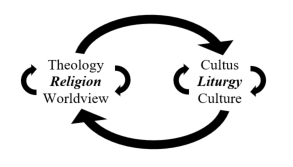
This interaction characterizes the central purpose and premise of what I write and teach, captured in the Latin phrase, lex orandi, lex credendi—“the law of prayer, the law of belief.” This ancient concept recognized the fundamental relationship between acts of worship and belief. Lex credendi is another way to describe religion, the combination of worldview and theology. Lex orandi designates liturgy, the behavioral patterns of both culture and cultus. The relationship between the two, as we have already seen, involves both reflection and formation. In other words, public worship both reveals belief and forms belief. How a community worships—its content, its liturgy, and its forms of expression—reveals the underlying religious commitments (worldview + theology) of those who plan and lead the worship. As Frank Senn has noted, “as a ritual system, liturgy expresses nothing less than a worldview.” This may not always be intentional, either. Often church leadership inherits certain ways of worshiping and employs them without ascertaining exactly what kinds of beliefs the worship practices embody, sometimes resulting in worship that does not reflect the church’s stated theological convictions.

This is significant exactly because of the second half of the premise—corporate worship forms the beliefs of the worshipers. Public worship is not simply about authentic expression of the worshipers; rather, how a church worships week after week progressively shapes their beliefs since those worship practices were cultivated by and embody certain beliefs. This happens whether or not the worshipers consciously recognize it, and therefore if church leadership has not given consideration to how the way they worship is shaping the theology of the congregation, it is quite possible that worshipers are being formed in ways the leadership does not intend.

Read More

Related Posts:

  • The Christian Worldview Is Both Comprehensive and Satisfying
  • A Pure Church
  • Theology, Philosophy and Worldview, A Relationship…
  • How Does Our Digital Life Affect Our Theology?
  • Theology Should Be the Primary Language of Your Kids

Subscribe to Free “Top 10 Stories” Email

Get the top 10 stories from The Aquila Report in your inbox every Tuesday morning.

Name(Required)

Archives

Subscribe, Follow, Listen

  • email-alt
  • facebook
  • twitter
  • apple-podcasts
  • anchor
Belhaven University
Coram Deo Conference - click for details

Books

Tool Small by Craig Biehl - Why Atheists Can't Know What They Say They Know
Plumbing the Depths of Darkness - click for details
That Hideous Strength: A Deeper Look at How the West was Lost (Expanded Edition)
  • About
  • Advertise Here
  • Contact Us
  • Donate
  • Email Alerts
  • Leadership
  • Letters to the Editor
  • Principles and Practices
  • Privacy Policy

Free Subscription

Aquila Report Email Alerts

Books

The Letter of Jude - book from Tulip Publishing
  • About
  • Advertise Here
  • Contact Us
  • Privacy Policy
  • Principles and Practices
  • RSS Feed
  • Subscribe to Weekly Email Alerts

DISCLAIMER: The Aquila Report is a news and information resource. We welcome commentary from readers; for more information visit our Letters to the Editor link. All our content, including commentary and opinion, is intended to be information for our readers and does not necessarily indicate an endorsement by The Aquila Report or its governing board. In order to provide this website free of charge to our readers,  Aquila Report uses a combination of donations, advertisements and affiliate marketing links to  pay its operating costs.

Return to top of page

Website design by Five More Talents · Copyright © 2026 The Aquila Report · Log in